Monday, July 6, 2026

American Historical Review Special issue "76 Objects"

I am beyond pleased to see the short essay ("Captured British Flag") that my fellow historian and friend, Gonzalo Quintero, and I wrote together appear in the "76 Objects" special issue of the American Historical Review


Thursday, July 2, 2026

56 Rue Jacob, the Treaty of Paris, and the 250th Anniversary of the Declaration of Independence

As the 250th anniversary of the Declaration of Independence approaches, there is a tendency to conflate the declaration of independence in 1776 and the subsequent acts that ultimately secured US independence at the end of the revolutionary war. The latter occurred only in 1783 as a result of the Treaty of Paris, which formally ended hostilities with Britain. The signing of the treaty has been memorialized in an unfinished painting by Benjamin West. 
 
The treaty itself was signed at 56 Rue Jacob in Paris, at what was previously the Hôtel d’York, a stone’s throw from what was then the British Embassy. The building stands and has served several purposes, which are recounted here. Curiously, the significance of the building was not known to the US government as late as the 1950s, when a plaque was affixed to its façade (it appears that the original plaque has been replaced with a new one). 
 
Given the importance of the Treaty of Paris in American History (and to the History of International Relations), I found it surprising, when walking the Rue Jacob on an unseasonably hot evening in late May, that the building in which the treaty was signed has suffered from neglect. The plaque, in French, draws attention to the building’s significance, but otherwise the graffiti defacing the entry way is what catches the eye. Its parlous state is all the more striking given its location in one of the more fashionable districts of Paris.

56 Rue Jacob is sometimes included in lists of sites in Paris of interest to students of US History. Yet the relative neglect of the building and the lack of widespread knowledge of the building’s significance in a year in which hundreds of millions of dollars have been spent commemorating and celebrating American independence is dissonant. The building’s present state is inescapably symbolic as well as dismaying to those scholars, myself included, who emphasize the international and imperial dimensions of the American Revolution. One can only hope for a refurbishment before 2033, when the 250th anniversary of the US’s entry into the community of nations is celebrated.


New essay on Spain's role in the American Revolution published in the Revista de Occidente (July 2026)

 Link to the Revista de Occidente


Paquette's recent review essay in the Chronicle of Higher Education (February 2026)


https://www.chronicle.com/article/higher-eds-future-is-managed-decline

Paquette appointed Executive Vice President and Provost of UMaine (March 2026)

 Paquette appointed Provost of UMaine


Wednesday, October 13, 2021

CBR20


https://cbr1820.com


Friday, March 5, 2021

"Can Higher Ed Save Itself?" Chronicle of Higher Education (March 4, 2021)


https://www.chronicle.com/article/can-higher-ed-save-itself 

Wednesday, July 15, 2020

Demotic and “democratic” languages in post-independence Brazil, 1822-48

Demotic and “democratic” languages in post-independence Brazil, 1822-48: (2020). Demotic and “democratic” languages in post-independence Brazil, 1822-48. Journal of Iberian and Latin American Studies. Ahead of Print.

Friday, June 12, 2020

Oxford Latin American Centre event (June 2020)

Tertúlia

at the Latin American History Seminar


Abolitionism and Politics
in Imperial Brazil
Jeffrey Needell, University of Florida, Gainesville,
Gabe Paquette, University of Oregon
 
jeff and gabe event
This event will take place on Zoom
Please email paola.quevedogarzon@area.ox.ac.uk with your e-mail address so we can register you. ***The deadline to register is 18th of June at 12:00 noon.
***If you are already on our LAC mailing list you will receive the event link by email - there is no need to contact us***
If you would like to join the LAC mailing list please email elvira.ryan@lac.ox.ac.uk to be added


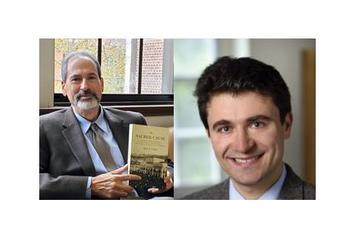
Jeffrey D. Needell is Professor of History and Latin American Studies at the University of Florida. He is the author of A Tropical Belle Epoque: Elite Culture and Society in Turn-of-the-Century Rio de Janeiro (1987) and The Party of Order: The Conservatives, the State, and Slavery in the Brazilian Monarchy, 1831-1871 (2006), and is the editor of Emergent Brazil: Key Perspectives on a New Global Power (2015).  His most recent book and focus of this Tertúlia, The Sacred Cause.  The Abolitionist Movement, Afro-Brazilian Mobilization, and Imperial Politics in Rio de Janeiro, was published by Stanford University Press earlier this year.

Gabe Paquette is Professor of History at the University of Oregon. Paquette previously held research and teaching posts at the University of Cambridge, Harvard University, Wesleyan University, and, for almost a decade, The Johns Hopkins University, where he was also Director of the Program in Latin American Studies. Paquette's research focuses on aspects of European, Latin American, and International History. His most recent book, The European Seaborne Empires: From the Thirty Years' War to the Age of Revolutions, was published in 2019.

Tuesday, May 12, 2020

Spain and the American Revolution at APS (May 2020)

Book Talk at American Philosophical Society (May 2020)

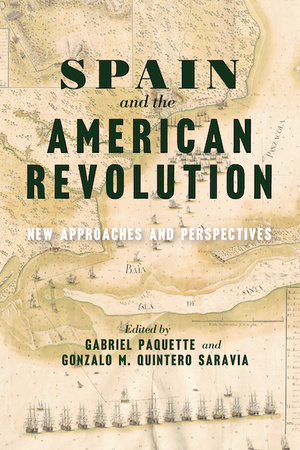
The David Center for the American Revolution at the American Philosophical Society Library & Museum is pleased to welcome Dr. Gabriel Paquette and Dr. Gonzalo M. Quintero Saravia to discuss their co-edited book Spain and the American Revolution: New Approaches and Perspectives. The discussion will be moderated by Dr. Patrick Spero, Librarian and Director of the APS Library & Museum.


Sunday, March 31, 2019